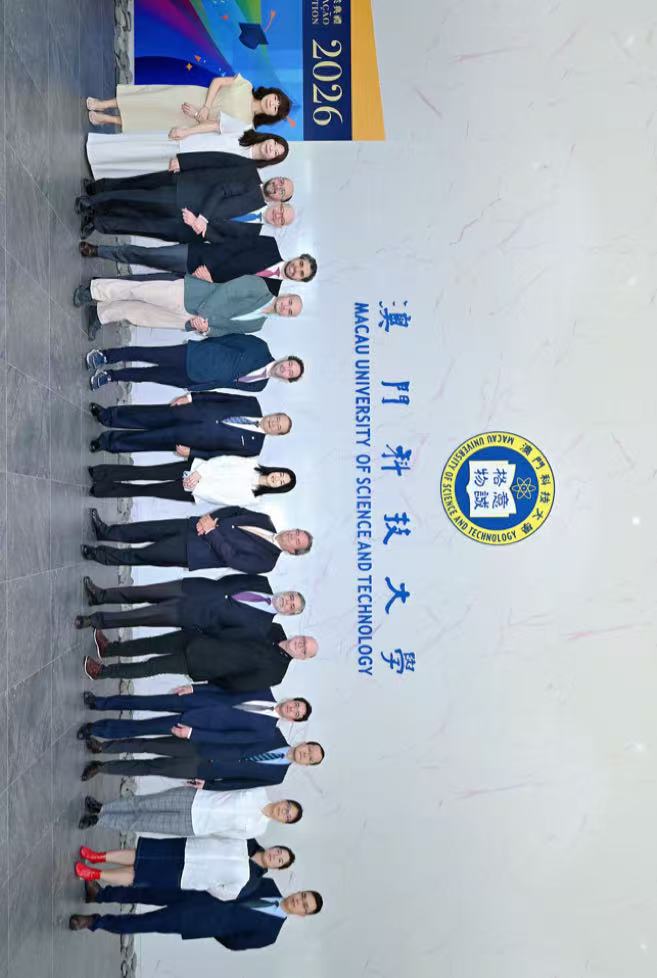


On June 5, 2026, the 61st Session of the “Shizi Gate Legal Forum – International Conference Legíslative drafting and Better Regulation – Current trends,” hosted by the Faculty of Law of Macau University of Science and Technology (MUST) and sponsored by the MUST Foundation, was held at MUST.
The conference brought together distinguished scholars and senior legal practitioners from the Faculty of Law of the University of Lisbon, the Lisbon Public Law Research Centre, the International Association of Legislation, the Faculty of Law of the Universidade Católica Portuguesa, the Faculty of Law of Universidade Lusófona, the Institute of Advanced Legal Studies of the University of London, the Faculty of Law of the University of Zurich, the Faculty of Law of Stockholm University, JNV Lawyers (Macao), and Ao Chi Tan Lawyers (Macao). Together with faculty members from MUST, participants engaged in in-depth discussions on topics including comparative legislative drafting, challenges in multilingual legal jurisdictions, regulatory optimization, and future legislative trends.
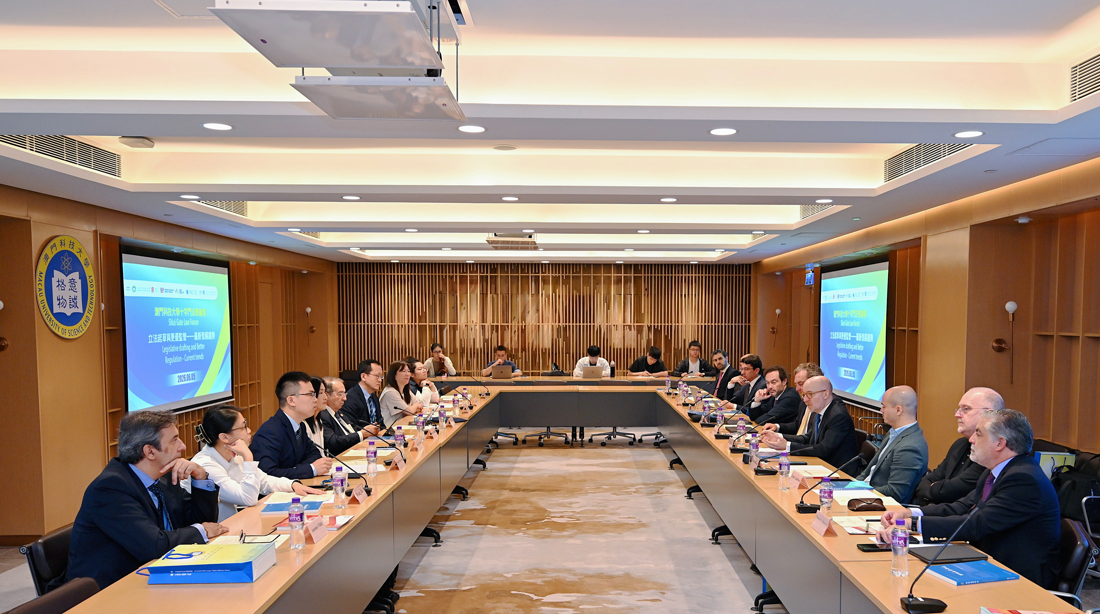
The opening ceremony was hosted by Assistant Professor Wong Weng Kuok of the MUST Faculty of Law. Professor Fang Quan, Associate Vice President of MUST and Dean of the Faculty of Law, delivered the opening remarks, warmly welcoming all distinguished guests.
Professor Fang emphasized that “good governance begins with sound legislation.” Since its return to China, Macao has achieved significant progress in legislative work, providing a solid legal foundation for the successful implementation of “One Country, Two Systems” with Macao characteristics. Against the backdrop of “One Country, Two Systems, Three Legal Systems,” she noted that advancing the rule of law in the Guangdong-Hong Kong-Macao Greater Bay Area requires in-depth research on legislative coordination among different legal jurisdictions. He expressed hope that participating scholars would share insights from comparative law perspectives. She also emphasized the importance of maintaining active academic exchanges with institutions and scholars worldwide, with the aim of positioning Macao as a platform for diverse legal cultures.
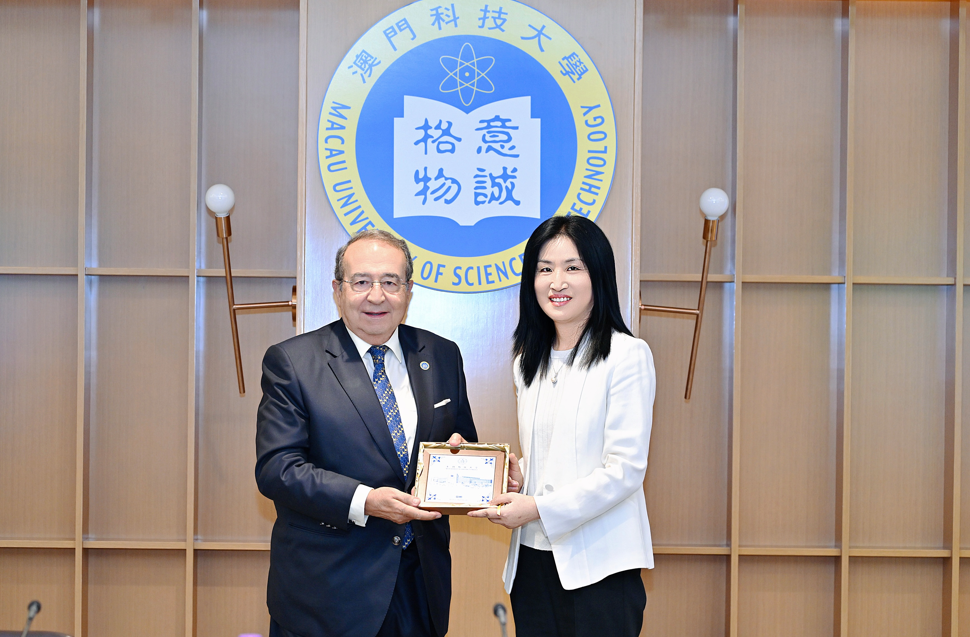
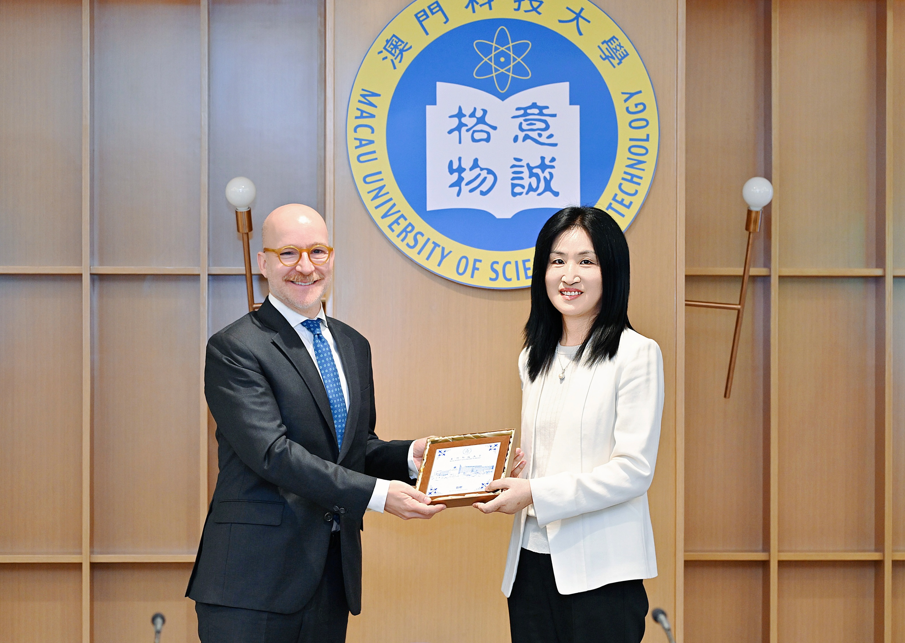
Opening remarks were also delivered by João Tiago Silveira, Co-Chair of the International Association of Legislation and Professor at the Faculty of Law of the University of Lisbon; Jorge Neto Valente, Founder of JNV Lawyers (Macao); and Tiago Freitas, Executive Coordinator of the Lisbon Public Law Research Centre, on behalf of the co-organizing institutions. Following the speeches, Professor Fang Quan presented commemorative gifts to the three guests.
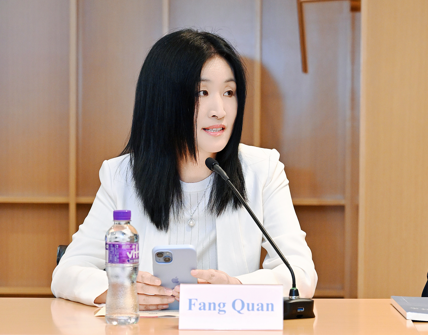
Professor Fang Quan, Associate Vice President of Macau University of Science and Technology and Dean of the Faculty of Law, delivered remarks
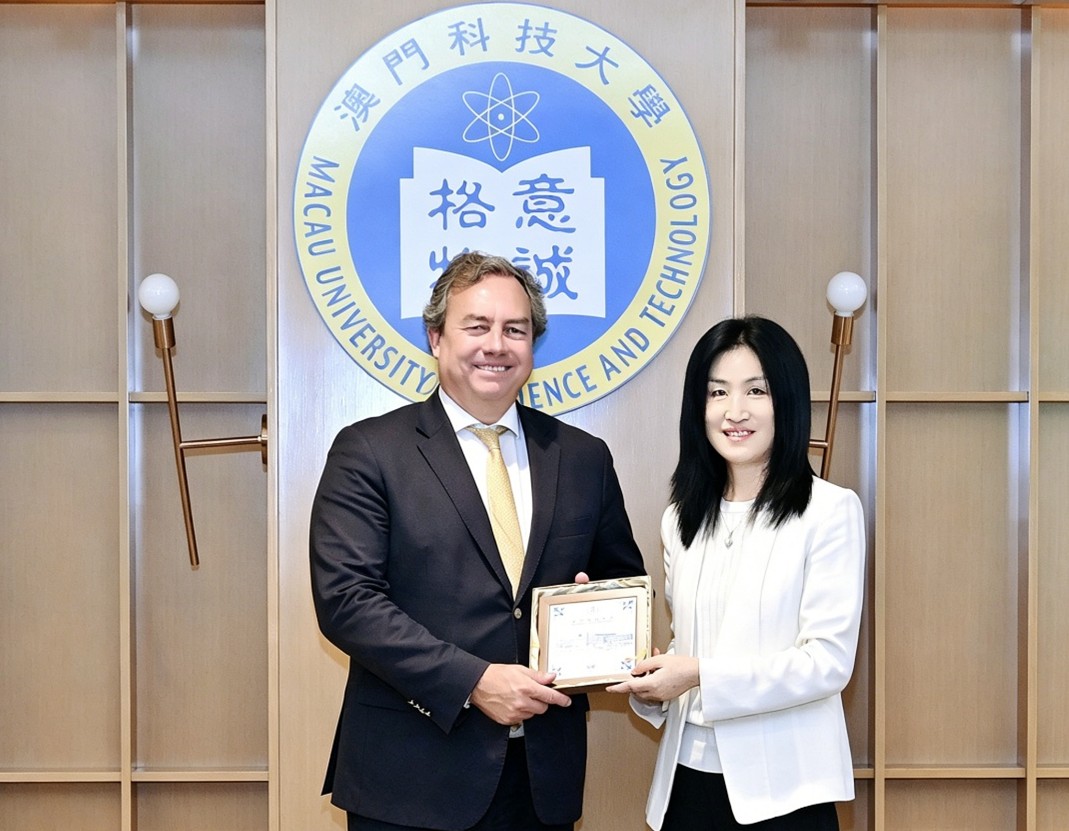
Dean Fang Quan presented a commemorative gift to Professor João Tiago Silveira
In the first session on “Legislative Drafting,” Assistant Professor Wang Jia from MUST discussed “Legislative Coordination in the Greater Bay Area,” examining coordination challenges across jurisdictions in the context of regional integration.
Professor João Tiago Silveira compared legislative drafting styles between the European Union and the United States, highlighting significant differences in legal culture and technical approaches. Professor Maria Mousmouti, at the Institute of Advanced Legal Studies, University of London (online), introduced the legislative drafting traditions and modern transformations in Commonwealth countries. Assistant Professor Miguel Romão from the University of Lisbon focused on the legal systems of Portuguese-speaking countries, analyzing their characteristics and challenges in legislative drafting.
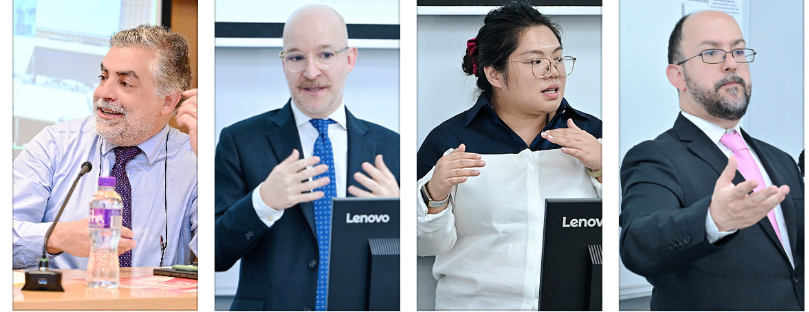
Assistant Professor Wong Weng Kuok from MUST explored technical issues in bilingual (Chinese–Portuguese) legislative drafting using Macao as a case study. Assistant Professor Ricardo Rodrigues de Oliveira from the Portuguese Catholic University examined coordination mechanisms in the EU’s multilingual legislative system. Professor Felix Uhlmann from the University of Zurich (online) shared practical experiences from Switzerland regarding language harmonization and interpretation in multilingual legal systems.
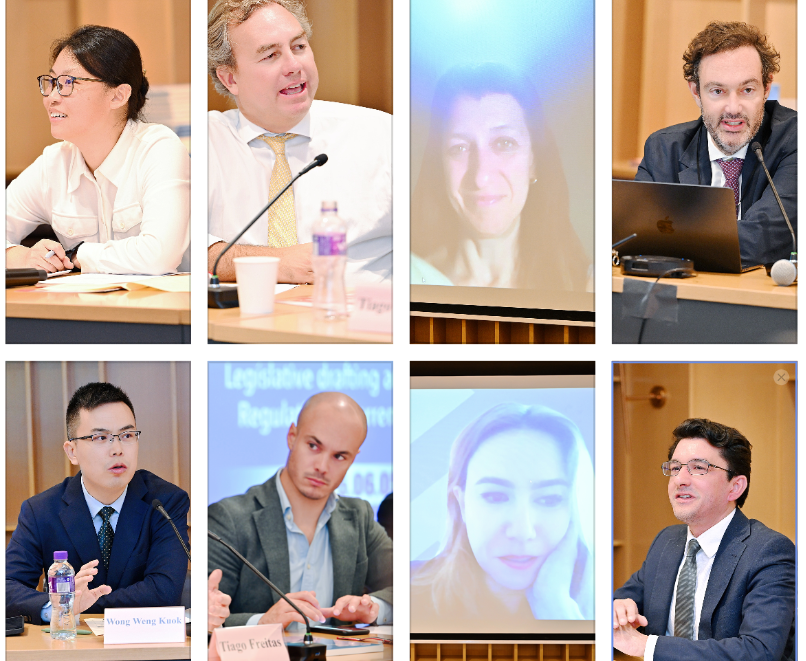
Wang Jia,João Tiago Silveira,Maria Mousmouti(online)、Miguel Romão
Wong Weng Kuok,Ricardo Rodrigues de Oliveira、Mariana Melo Egídio、Felipe Andrade
In the second session on “Better Regulation,” Mariana Melo Egídio, Lecturer at the Faculty of Law of the University of Lisbon, explored new trends in stakeholder participation in the legislative process.
In the subsequent panel discussions, Professor João Tiago Silveira and Felipe Andrade from the University of Lisbon examined the “construction of legislative impact assessment systems,” while Associate Professor Manuel Cabugueira from Universidade Lusófona presented the latest international developments in legislative impact assessment.
In the “Better Regulation” panel, Lecturer Tiago Fidalgo de Freitas from the University of Lisbon discussed the European Union’s Better Regulation agenda. Assistant Professor Gong Xiaohan from MUST analyzed regulatory sandbox models in hydrogen energy regulation through a comparative study of China and Europe. In another panel, Assistant Professor Marco Caldeira from the University of Lisbon compared the public procurement legal frameworks of Macao and Portugal, while Assistant Professor Xun Xiao from MUST examined the interaction between business environment reforms and local regulatory development, using Zhejiang Province as a case study.
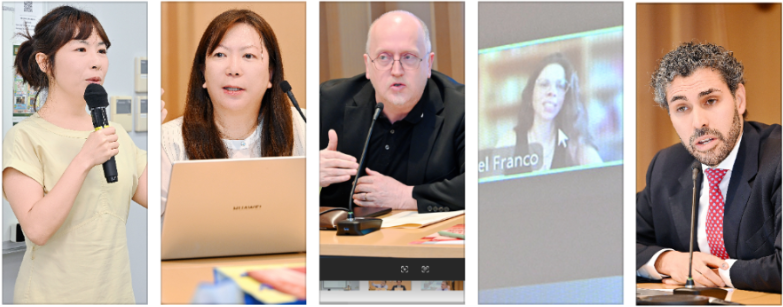
Manuel Cabugueira, Tiago Fidalgo de Freitas, Gong Xiaohan, Marco Caldeira
Xun Xiao, Ao Chi Tan, Mauro Zamboni, Raquel Franco, José Miguel Figueiredo
In the third session, “Future Trends,” Lawyer Ao Chi Tan analyzed legal challenges facing environmental public interest litigation in Macao. Professor Mauro Zamboni from the Faculty of Law of Stockholm University explored the potential role of artificial intelligence in legislative drafting and participatory democracy. Assistant Professor Raquel Franco from the University of Lisbon (online) examined the impact of legislation on human behavior from a behavioral science perspective, and José Miguel Figueiredo from the Lisbon Research Centre for Public Law discussed possible forms of legislative drafting by the year 2050.
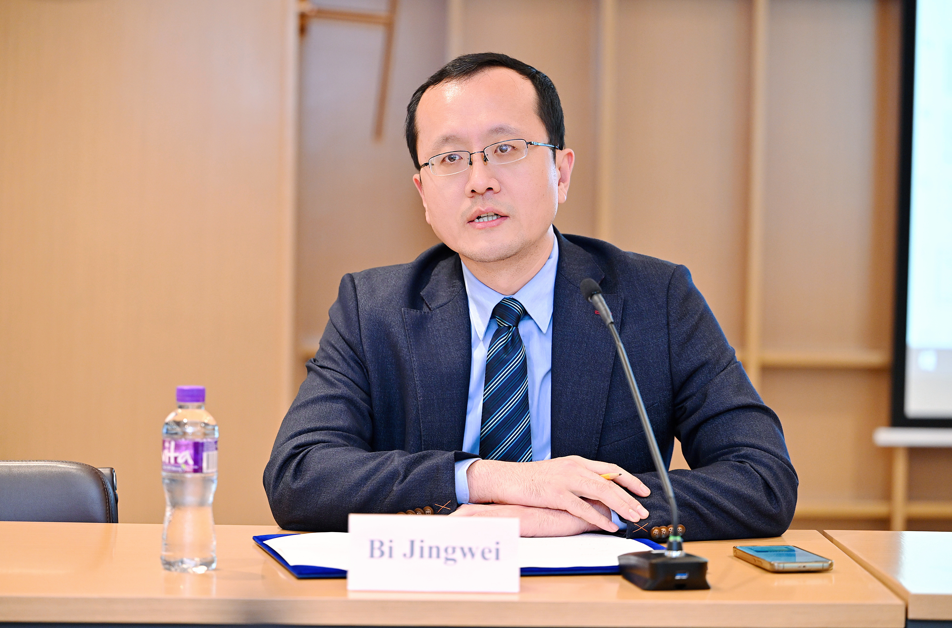
The conference concluded with closing remarks by Associate Professor Bi Jingwei, Programme Director of the Faculty of Law at MUST, who summarized the key outcomes and expressed gratitude to all participants.
This international conference not only deepened academic dialogue on legislative techniques and regulatory reform but also provided a high-level platform for practical exchange across different legal systems. The discussions are expected to further promote the scientific development of legislation and the modernization of the rule of law.